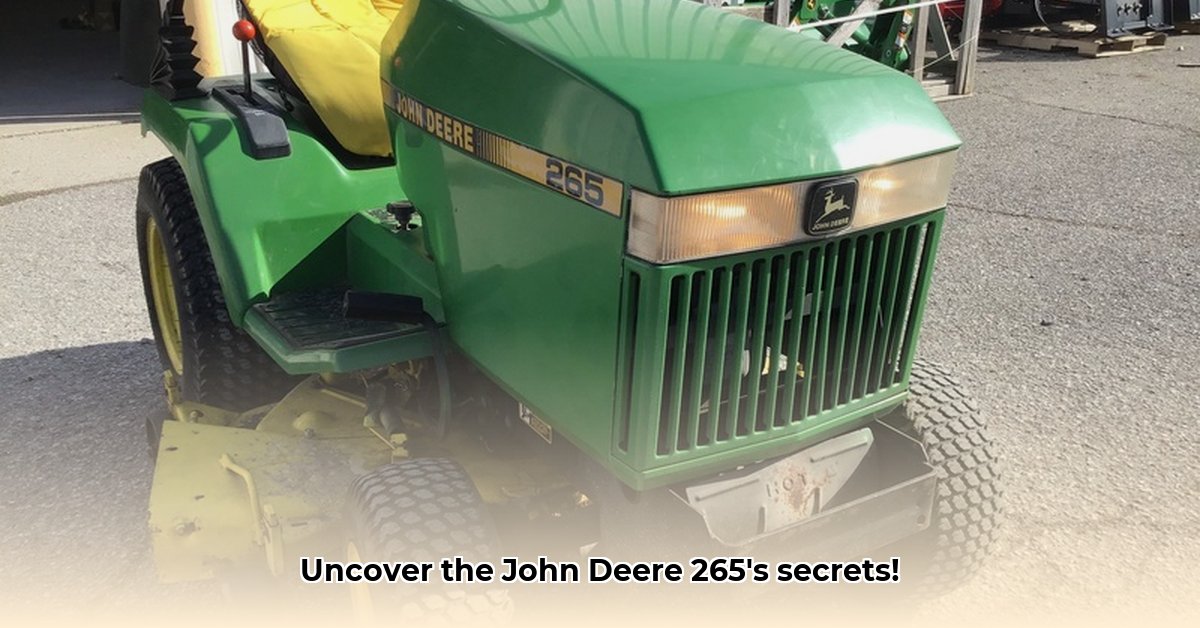
The John Deere 265 lawn tractor, produced between 1988 and 1994, represents a significant chapter in the history of residential lawn care equipment. Combining power with relative affordability, it gained popularity among homeowners. However, comprehensive comparative data remains elusive, limiting our ability to definitively assess its performance against contemporary competitors. This guide aims to provide a detailed overview based on available information, highlighting areas where further research is needed. For more detailed weight specifications, see this helpful resource on tractor weights.
Key Specifications and Features
While some minor variations exist across different sources, the core specifications of the John Deere 265 remain consistent. This consistency reflects the model's robust design and manufacturing.
| Feature | Specification | Source Reliability | Notes |
|---|---|---|---|
| Engine | 17 HP Kawasaki FC540V (typically) | High | Engine specifics might vary slightly depending on the year of manufacture. |
| Fuel Tank Capacity | 3 Gallons | High | Sufficient capacity for extended mowing sessions. |
| Transmission | Hydrostatic (Sundstrand) | High | Offers smooth, variable speed control without the need for gear shifting. |
| Cutting Deck | 46-inch Mid-Mount | High | Ideal for medium to large lawns; other attachments were often available. |
| Weight | Approximately 630-755 lbs (depending on accessories) | Moderate | Weight can vary based on optional accessories and added features. |
Engine and Transmission: A Closer Look
The John Deere 265 typically featured a Kawasaki FC540V engine (though other options may have existed depending on the year). This air-cooled, single-cylinder engine provided ample power for most residential lawn care tasks. Its reliability contributed significantly to the tractor's popularity. The hydrostatic transmission, usually a Sundstrand unit, allowed for smooth, variable speed adjustments. This feature added considerable convenience and ease of operation compared to gear-shifting mechanisms.
Historical Context and Market Position
The John Deere 265 emerged during a period of significant innovation in lawn tractor technology. While precise market share data is lacking, anecdotal evidence and owner forums indicate substantial popularity. However, a comprehensive comparative analysis with contemporaries such as Simplicity, Cub Cadet, and Toro remains a crucial area for future research. This would provide a more nuanced understanding of the John Deere 265's competitive landscape. Wouldn't it be fascinating to see a true head-to-head comparison against these other machines?
Parts Availability, Maintenance, and Restoration
Finding parts for a John Deere 265 in 2024 presents a mixed bag. While some common parts might be readily available from John Deere dealers or online retailers like eBay, others may require more effort and resourcefulness. Online forums dedicated to vintage tractors are frequently invaluable tools; they offer a vast repository of information, part leads, and troubleshooting tips from experienced enthusiasts. Restoring a John Deere 265 is a significant undertaking that demands patience, mechanical aptitude, and access to both proper parts and detailed service manuals.
Future Research Directions: Filling the Knowledge Gaps
Several critical areas demand further investigation to comprehensively understand the John Deere 265:
Comparative Performance Analysis: Direct comparisons with contemporary models from competitors are needed to fully assess its capabilities and limitations. This would require extensive data collection from various sources.
Lifespan and Failure Rate Studies: Analyzing the typical lifespan and common points of failure would be highly beneficial for current and prospective owners. This data could inform maintenance practices and improve longevity.
Owner Feedback Compilation: Gathering and analyzing owner feedback through surveys or online forums could provide valuable real-world insights into performance, maintenance, and common issues.
Parts Availability Tracking: A systematic study tracking parts availability over time could predict future maintainability challenges and inform resource allocation for restoration efforts. This proactive approach is crucial for classic machinery.
The information provided here forms a solid foundation, but significant knowledge gaps exist. Continued research in the outlined areas will create a more complete and valuable resource for John Deere 265 owners, enthusiasts, and future historians of lawn care equipment. The full story of this iconic machine deserves further exploration.